Amey Pune

Sports Performance · Healthcare

NeuroDrive.

RoleUI/UX Designer — IA, flows, UI & handoff
TeamTwo designers, the client & developers
StatusProduction app · in active development

Making complex neuro-performance assessments simple enough to complete on a mobile phone.

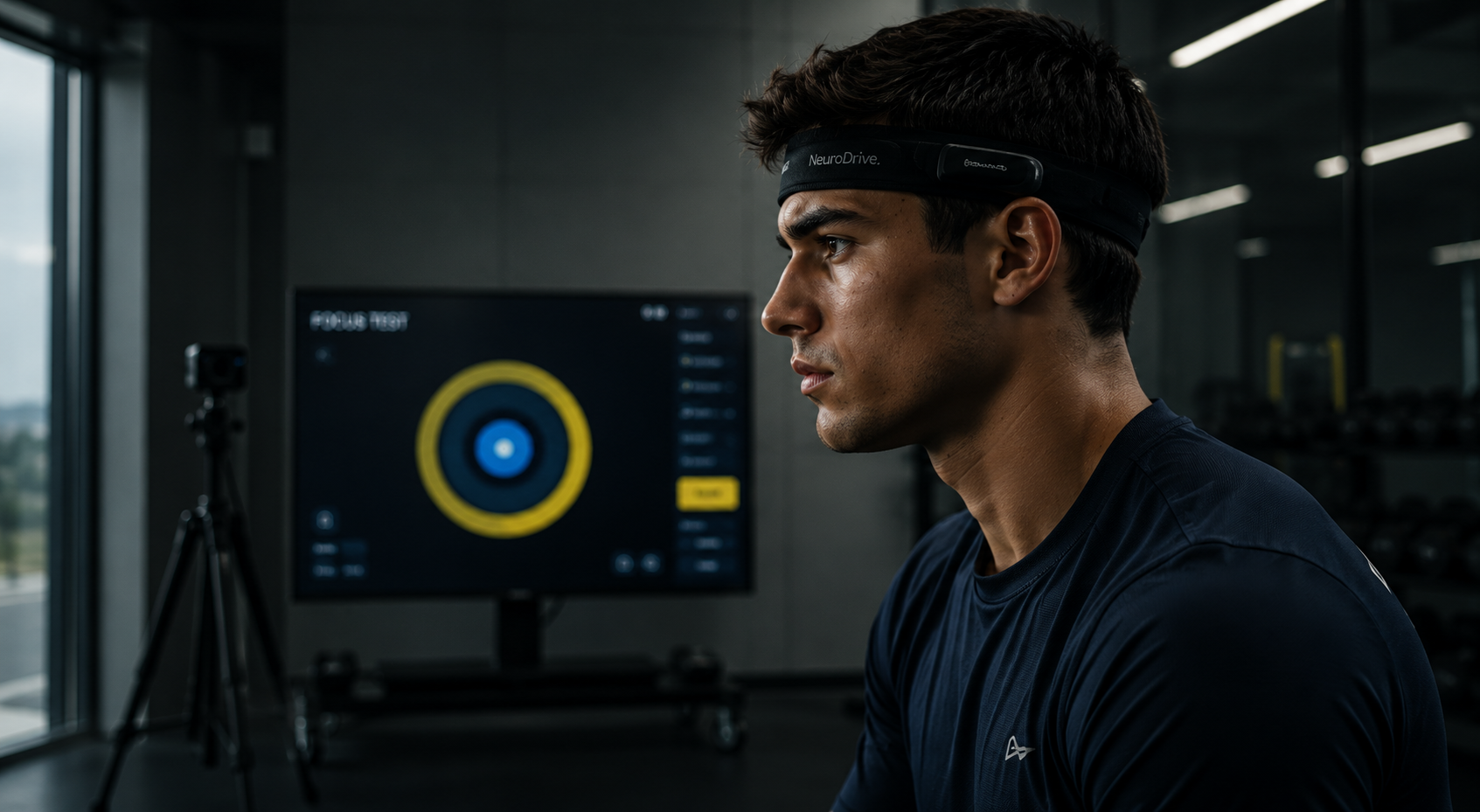
An athlete wearing a NeuroDrive headband during a focus assessment
Neuro-performance assessment in the lab — the athlete, the headband, the focus test.

02

The challenge

The hard part wasn't one assessment. It was six that had to feel like one.

NeuroDrive helps athletes improve skills like balance, reaction time, eye movement, and focus through different assessments.

The client already had the clinical process and knew what each assessment should measure. Our job was to turn those requirements into a mobile experience athletes could complete on their own — without learning a new interface for every test.

Six separate tests A new interface to learn every single time.
NeuroDrive One flow you learn once and reuse everywhere.

The experience athletes complete on their own, one assessment at a time.

03

My role

The science was fixed. Everything the athlete touched was mine to design.

The client owned the clinical methods; I owned the product experience end to end — from information architecture to developer handoff. I made the structural calls that turned six fixed assessment specs into one coherent app, and drove those decisions across a team of another designer, the client, and the developers.

  • 01Understanding the requirements
  • 02Information architecture
  • 03User flows
  • 04Wireframes
  • 05UI design
  • 06Design iterations
  • 07Developer handoff
  • +Cross-functional collaboration

04

Understanding the product

Not six products. One system with six activities.

Every assessment measured a different skill, but the experience shouldn't feel different every time. Treating them as one system with six activities kept the learning curve low — and made the product easier to maintain and scale.

Six different activities
{{ a.mono }} {{ a.name }}
One system

One shared experience, six activities inside it.

Same navigation, same patterns, same words — so learning one assessment means you already know the rest.

05 — What we realized

Athletes shouldn't have to learn each assessment. Learn one, and the rest already feel familiar.

06

Key design decisions

Three decisions kept six assessments feeling like one.

{{ f.step }} · {{ f.label }}

Decision {{ d.num }}

{{ d.title }}

Why it mattered

{{ d.why }}

Trade-off

{{ d.gaveUp }}

{{ d.metricTitle }} {{ d.metricSub }}
07

App structure

I mapped the whole app before designing a single screen.

Mapping the structure first let me organise six assessments into one consistent experience while keeping navigation simple.

Entry

Onboarding

Choose

Assessment Hub

Shared Assessment Flow

All six run through the same flow.

{{ a.mono }} {{ a.name }}
Read

Results

Over time

Progress

08

The product experience

One flow, reused across every assessment.

Every assessment moves through the same five steps. Only the assessment itself changes — the rest of the experience stays familiar.

{{ s.n }} {{ s.title }}

The assessment step

Only the assessment screen changes state — idle, active, complete.

Idle
Active
Complete

The surrounding experience

Everything around the assessment stays the same, every time.

{{ c.title }}

{{ c.caption }}

05 · The bigger picture

Progress over time.

Multiple assessments combine to build a longitudinal performance profile for coaches and athletes.

09

Results & AI insights

Every assessment ends with personalized AI insights.

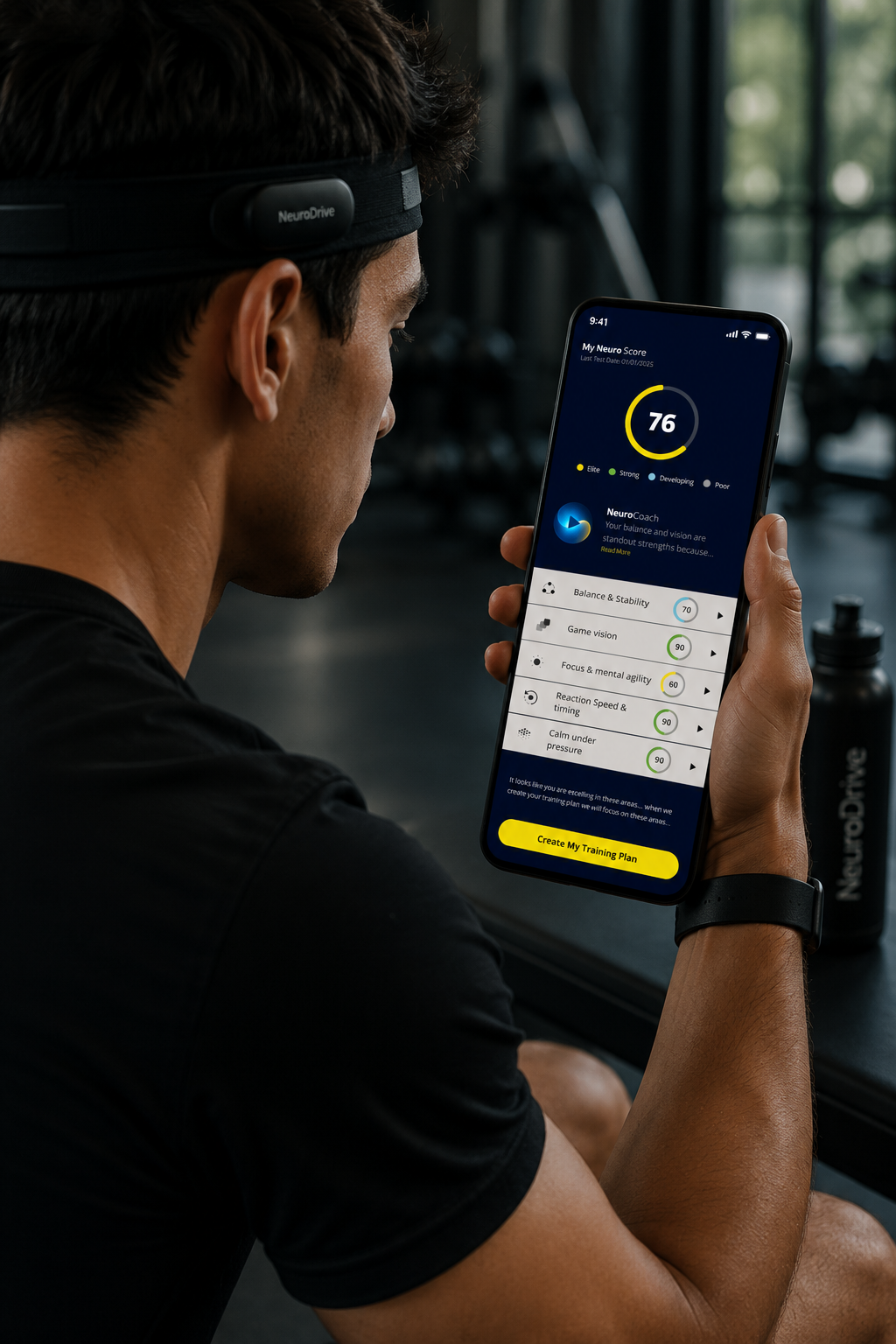
After every assessment, NeuroDrive generates a NeuroScore by combining multiple cognitive and physical performance signals. NeuroCoach transforms those results into understandable strengths, weaknesses, and personalized next steps — helping athletes improve without interpreting complex data.

Personalized NeuroScore

One score synthesized from multiple assessments for a quick understanding of overall performance.

AI-powered NeuroCoach

Transforms raw performance data into clear, personalized recommendations.

Actionable training plan

Guides athletes toward their next session by focusing on their weakest performance areas.

An athlete reviewing his NeuroScore and NeuroCoach recommendations in the NeuroDrive app
The real Results screen — NeuroScore and NeuroCoach, in an athlete's hands.

10 — What I learned

Designing six neuroscience assessments taught me that in a specialist domain, my job wasn't to simplify the science. It was to hold one consistent experience steady while six clinical teams each optimised their own.

If I return to NeuroDrive, I'd test the instruction screens with real athletes — the seconds right before a test starts are where trust in the whole system is won or lost.